Monday, August 10, 2020

How to choose material for bathroom partitions?


If you are going through a much-needed facility renovation, designing a new bathroom space for your business, or if you are planning out a brand new facility, it crucial to choose the right bathroom partition materials. The right plastic bathroom partitions will ensure safety and security for the occupants.


If so, you have got a lot of things to consider when it comes to replacing or installing toilet partitions. There is a list of materials used with a lot of design options that can be suitable for the job. But when it comes to finding the best material, people prefer plastic. However, if you end up choosing other materials, you may have to replace them sooner than later.


Though, there are several factors that need to be considered when deciding on the type of bathroom partitions you should install. Here is a list of few of them:

  • Consider the place, is it an office, gym, school or something else?
  • The type of building you are operating in or where the restroom is going to be.
  • How frequently will it be used?
  • What’s the main concern? Durability? Or are you more interested in a sophisticated feel?
  • How much wear and tear will the place be subjected to?
  • And the budget you have decided to spend.


These are all the things you should definitely consider when deciding, but the most important thing that might not have crossed your mind is: what material to choose to build bathroom partitions?

It goes without saying that, not all the partitions used in bathroom partitions are the same. In most cases, bathroom partitions are made from plastic laminates that may appear to be suitable material at first but come with drawbacks too. The bathroom interiors are always subjected to constant exposure to moisture and humidity which can cause the plastic laminates to get rotted as they are not resistant to scratches, dents and exposure to humidity and with constant wear and tear these materials start to sprout mold increasing the risk of collapsing and even increase risk of damaging other interiors. Moreover, the mold can take over your other interiors which would result in replacing other materials immediately, because it will largely affect the air quality and also lead to respiratory issues for the occupants using bathrooms.


Why do people go for solid plastic or HDPE as bathroom partitions?


Apart from plastic laminate, solid plastic is the material used to level up the durability, functionality and is probably an inch thick. Partitions made from solid plastic is completely made from solid panels of the polymer plastic which are known for being extremely resistant and durable to any wear and tear, they have high resistance to anything that can damage them, unlike plastic laminates or any other material, from mold, moisture, common cleaner, rust and what not.


One of the main reasons that users go for HDPE over traditional plastic is that it has a solid body construction, that is these partitions are durable. They can withstand any kind of environment- dry, wet, hot or cold; bask in the humidity and moisture without the threat of mold growth. Moreover, these help in keeping the air quality in bathrooms safe and clean because the materials stand up to heat, moisture, and mold.


Another major benefit of using HDPE over other plastic is that it does not need a costly replacement or regular maintenance now and then. That means the HDPE plastic partitions have relatively low maintenance. It doesn’t need to be repainted or any replacement of parts, if it is dirty with marks or graffiti that can be just wiped or cleaned away with the help of a cloth.


Friday, May 1, 2020

High Density Polyethylene in accordance with NFPA 286

The National Fire Protection Association (NFPA) developed compliance parameters relating to fire safety and building construction. With the increased use of High-Density Polyethylene as a building material, it must be tested in accordance to comply with the standard of NFPA 286.

Materials are exposed to various staged flame intensities and are prohibited from having flames come in contact with structural locations (ceiling and walls). Additionally, the energy of the flame and amount of smoke released must stay within a certain threshold. The peak rate of heat released throughout the NFPA 286 tests should not exceed 800 kW.

How does this affect the choice of material in the toilet partition?

One of the most critical restroom design decisions that architects and designers face is the choice of toilet partition material. When in the market for toilet partitions, it is necessary to analyze your material for the corresponding standard. The material selected for a toilet partition system can impact its durability, compliance, resistance to damage, and even how easy it is maintained.
If we have a look at them a majority of materials used in toilet partitions are made according to the fitting ASTM fire-resistance standards.

What is HDPE?

HDPE (high-density polyethylene) is a solid plastic material that can be used for a variety of uses. HDPE is made from the resin of high-density polyethylene that has added pigments to give it color. Due to its solid construction, it proves to be highly durable and even resistant to scratches, dents, and impacts. HDPE actually has several advantages over other materials that are commonly used with toilet partitions in commercial bathrooms. This material works for both indoor and outdoor bathrooms.One of the major advantages that HDPE has over traditional plastics and laminates is that it has a solid body construction, allowing it to bask in humidity and moisture without the threat of mold growth. HDPE helps to keep the air quality in the restroom safe and clean because it stands up to the elements and mold. HDPE is also stronger than the other toilet partition materials. Even if it is scratched or hit it has the ability to still retain its overall aesthetic. Bathroom partitions are typically used in commercial establishments to create individual, bathroom stalls in restrooms with more than one toilet. Public bathrooms can be a harsh environment for many materials which is why partitions need to be able to withstand moisture, chemicals, disinfectants and even graffiti.Toilet partitions made from this material are highly resistant to many effects. They are water-resistant, making them less susceptible to mold and mildew growth. This quality of HDPE adds to its benefits as it can help keep your bathroom more sanitary. The material also resists abrasions from a variety of sources. The material can go through abrasions from a variety of sources.

This material is also recyclable, which makes them a sustainable option. If you or your business want to contribute to the betterment of the environment, HDPE is a great pick dedicated to sustainability and lowering its impact on the environment.

Wednesday, March 25, 2020

Types of Semiconductor Plastic Used in Manufacturing of Semiconductors

Semiconductor Plastic
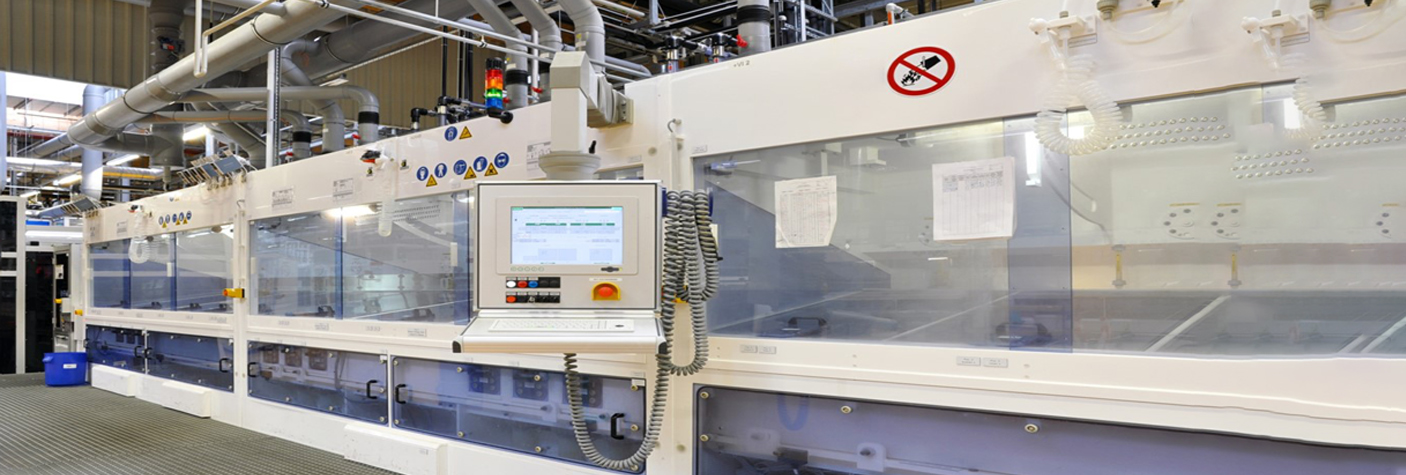
Semiconductor manufacturing is a delicate process, as it requires a lot of precision with no margin for error. The facilities need to be extra clean, plus the materials used must be durable and heat resistance, along with other properties needed for such facilities. That is why semiconductor plastic needs to be carefully chosen which adhere to those guidelines.

Among a host of plastic variants available industrywide, only 3 variants of plastic are preferred in semiconductor industry. They are:

High Density Polyethylene (HDPE)

High density polyethylene is everything that is desirable in a semiconductor plastic; it is strong, durable, chemical resistant and heat resistant. It is highly versatile and can be worked easily, so they are used to make many parts, components and accessories for the semiconductor industry. The plastics need to be of high quality, durable, rigid and highly pure, so HDPE is the perfect plastic variant for the same. High density polyethylene’s main advantage over other plastics is that it is cheaper than most other semiconductor materials, making it an economically viable solution for most small, medium and large scale industries that are involved in semiconductor industries.

Polycarbonate

Polycarbonate is a unique plastic variant that has diverse applications not only in the semiconductor industry, but also in other industries that deal with manufacturing and packaging. Its main advantage over most other plastics is its strength; it is very strong, one of the strongest plastic available on market right now. It is used to make critical semiconductor components such as pipes, pipe components, valves, tubes, filters, purifiers and other such applications. Polycarbonate has other useful properties that is desirable for use in semiconductor industry such as resistance against acids, resistance against bases, low smoke emitting, high resistance against fires, good resistance against electricity. The ability to resist electricity and prevent their accumulation is of absolute importance in the semiconductor industry as it prevents accumulation of static electricity near semiconductor chips. Static electricity can make a chip go haywire and destroy it if present in excess.

Polypropylene

Polypropylene can be said as a cheaper alternative to the slightly more capable high density polyethylene plastic variant (HDPE). One thing polypropylene does better than HDPE is its resistance against harsh chemicals such as strong acids and bases. Because of this, it is often used to make critical components of a semiconductor chip such as electrical insulators and chip parts. It is also used for making bigger objects such as workbenches and tables for making semiconductor parts. It is cheaper than HDPE, hence often used in small to medium scale industries. 

Custom Semiconductor Plastic


Many companies that specialize in manufacturing semiconductor plastic have some of their own designs and custom variants available for clients. These custom semiconductor plastics are often a variant of any of the 3 above mentioned semiconductor plastics, and tweaked according to their own or client specifications for specific tasks. Such custom plastics are typically built to order, unlike generalized semiconductor plastics are that widely available. 

Sunday, January 19, 2020

Everything You Need to Know About Type 1 PVC Along With Its Fabrication Methods


Introduction:

Type 1 PVC is a kind of thermoplastic product with widespread applications across diverse industries. Unlike most other plastics, PVC is relatively inexpensive to produce and highly workable, allowing it the capability to be used as anything from pipe making to electrical insulations and exterior coatings.

Manufacture of Type 1 PVC:

Type 1 PVC is usually made using UV stabilization method, which is a method of thermoforming plastic. Thermoforming involves applying heat and pressure of varying kinds on plastic sheets to modify them into desired shape and design. UV stabilization process uses UV rays to provide heat which helps in its uniform distribution, followed by cooling. They require temperatures in the range of 266 degrees Fahrenheit and 338 degrees Fahrenheit to become workable enough to mould them into shape.

However, UV stabilization method forms just a part of the fabrication process. Other parts of the fabrication process are:

Machining: 
This process involves using low-speed rotors to shape plastic sheets into desired dimensions and chipping off unused parts from the finished product. Low speeds are preferred to have more control over chipping and to prevent severed chips from flying around everywhere.

Welding: 
Hot air welding is often used to join two or more type 1 PVC parts, either in its raw form or finished form as necessary. However, welding is a form of destructive joining, so it is preferable to use only for joining large parts where welds won’t be very visible.

Bonding:
In cases where welding cannot be done, bonding is used to join two or more PVC parts. Bonding makes use of PVC-friendly adhesives for joining. Because it is nondestructive, it is generally used for joining small parts where joints would be visible if joined via welding.

Properties of Type 1 PVC:

As type 1 PVC is manufacturing using UV stabilization method, it has good resistance against UV rays. This makes it perfect for exterior use, especially in applications where sun exposure is guaranteed. Other properties of type 1 PVC are:

Highly Resistance Against Fire: 
Type 1 PVC is extremely fire-resistant, hence it makes for good fireproofing material for use in different scenarios such as PVC pipes. Electrical insulations, wall dividers etc.

Extremely Hard: 
Type 1 PVC is hard enough to be used as exterior material. Well-made PVC components last long and don’t lose their shine or colour with time as easily as other plastics due to their high tensile strength.

Electrical Insulation: 
PVC is chosen as wire insulator not just because of their fire-resistant properties, but also because they are poor conductors of electricity, providing good electrical insulation.

Commercial Applications of Type 1 PVC:

Due to their high performance and good resistance properties, they are used in various applications such as:

  • Ø  Cabinets for bathrooms and kitchen
  • Ø  Plastic nuts, bolts and binding apparatus
  • Ø  Covering sheets for exterior protection
  • Ø  Electric wire insulator
  • Ø  Frames for windows, doors and skylights
  • Ø  Plumbing pipes
  • Ø  Filters


Friday, December 20, 2019

Everything You Need to Know About the NFPA 286 Test for Testing Materials with Fire

National fire protection association, or NFPA for short, offers many kinds of tests for fire testing and material compatibility with fires. NFPA specifies different codes for different kinds of tests and the areas of evaluation are for standards of building materials, electronics and other burn-able materials.
The NFPA 286 test is one of the many fire standard tests that specifically check if the material is affected by fire or not, and how much is affected. This test is assigned for interior wall partitions, ceilings, floors and generally anything that is constructed for indoors. This standard is useful in determining what areas of a room contribute to the growth of a fire if any, and how fast the fire spreads due to these materials. This test is also known as a room corner test.

NFPA 286 was introduced to determine which materials help fires spread faster and which materials restrict the growth of a fire. While most of the materials used indoors burn, the rate at which they burn varies greatly. For example, a wooden wall partition burns and so does steel, but the former burns at a much faster rate than the latter. In fact, steel won’t start burning unless the temperature is extremely high, close to the melting point of steel.

This test help evaluate how protected the building will be in case of a fire. Suppose a flammable material is being used indoors, such as paper-based wallpapers and simple plastic wall partitions. Those will catch fire faster, and it will result in fire moving next door at a much faster rate. This means by the time firefighters arrive at the scene, a lot of damage will have already occurred. But if a material that does not burn fast is present, say concrete, specialized wall dividers or non-flammable wallpapers, then the rate of spread of fire will be very less. By the time firefighters arrive at the location, the fire will have been restricted only to a few areas, making their work easier and keeping damage to a minimum.

Most manufacturers who manufacture and sell the indoor building items such as tiles, plasters, wall dividers, and wallpapers often get their products tested under NFPA 286 to assure building safety protocols are put in place. While they are mostly used in commercial spaces, homeowners can also get NFPA 286 accredited materials installed in their homes.

Monday, November 25, 2019

Common Differences between Thermoplastic Solutions and Thermosetting Plastic

The word ‘thermo’ is common to both thermoplastic and thermosetting plastic variants, so it is easy to mistake one for another. In fact, similar names make it seem like these are just slight variants of each other, but in reality, the properties of thermoplastic and thermosetting plastic are very, very different; so much that not all thermoplastic suppliers deal with thermosetting variants. Some deal with only thermoplastic solutions, whereas many deal with both thermoplastic and thermosetting plastic solutions.

The process of initial manufacture is almost the same, but that is where the similarities end. The best way is to list out their distinctive pros and cons that will give you a better idea of the things that differentiate them, starting with Thermoplastic.

Thermoplastic

Thermoplastic is made of plastic pallets which are heated in a furnace. Heat applied to these plastic pellets is increased over time, until the pellets melt completely. The melted plastic is made into the plastic sheet, also called a thermoplastic sheet. These sheets, when warm, are pressed onto specific molds as required to transform them into desired products. There is no chemical bonding during the manufacturing process, allowing manufacturers to reuse the excess left out plastic for the next batches.

Major Advantages:

Recyclable: A product made of thermoplastic can be recycled to make a different product.

Strong: They have high strength and good resistance against impacts.

Better Finish: Thermoplastics offer better finishing quality than thermosetting plastics.

Chemical Resistant: They are resistant to common chemicals and some acids.

Reshaping Ability: The finished product can be reheated and reshaped to any other shape.

Major Disadvantages:

Low Melting Point: Products made of thermoplastic can easily melt under high temperatures.

Expensive: The raw pellets of plastic used to make thermoplastic are quite expensive.

Thermosetting Plastic

Thermosetting plastic is made from a different kind of plastic polymer. After undergoing heating and melting, they get fixated in the same shape as they are molded into when they cool off, unlike thermoplastic that can be reshaped. That is why a different process known as reaction injection molding process is used to set these into desired molds. The chemical bonds formed are permanent and cannot be broken.

Major Advantages:

Temperature Resistant: They cannot melt as easily as thermoplastic at high temperatures.

Flexibility: They can be used for any kind of molds as the plastic is used in liquid form when injecting to molds.

Better Stability: Thermosetting plastic is highly stable and stronger than thermoplastic.

Inexpensive: They are cheaper than thermoplastics.

Major Disadvantages:

Not Recyclable.

Poor Surface Finish.

It cannot be Reshaped like Thermoplastics.

Monday, November 18, 2019

Choosing the Right Thermoplastic Component for Your Product


If you have just stepped into the world of manufacturing and have a viable design with decent demand in the market, the chances are that you are looking forward to finding the correct component for the product. You might lay your experience in the hands of a person who has previous experience on the job or turn the table by doing some extensive research online as well as in the market. Most of the viable products that give you a decent return on the manufacturing are formulated with the thermoplastic. However, given the different rates of thermoplastic, you might want to choose the one that fits the bill entirely and gives you as well as end consumers an ultimate level of satisfaction.

Here are the factors that you must consider in the making of the design:

Temperature resistance: Since we all know the property of the polymer that helps it to get into the liquid state, the temperature of the product (usage-based) should be kept in mind. The temperature at which your end the product will operate will help you decide the exact type of polymer that you need. Even if you do not get on to the specific model, you will be able to narrow it down to a large extent. For a temperature resistance of over 150C, then you’ll need to choose a high-performance plastic, such as PVDF.

Budget: Thermoplastic suppliers suggest that polymers get into a liquid state when given the right amount and heat and then come back to stable on average temperature. It helps in providing these polymers some molding capacity. The stronger and more temperature resistant you want your polymer to be, the higher will be the cost of buying out the polymer for making the design. Hence, you must consider keeping the budget and the related factors in mind for taking out the affective investment cost in the manufacturing unit. 

Strength of plastic: Depending upon the usage of the product, they can be broadly classified into two types functional and aesthetic products. The purely aesthetic ones can easily be used in a lower grade, and they do not have to undergo wear and tear in the daily course. Other thermoplastic solutions should be carefully chosen, especially if they are to be exposed to heat in a certain way. It other words, the amorphous plastic is used for products that provide aesthetic value, and others like the nylon are the best choice for polymers that need to deliver the functional capability.

Electrical and COF properties: The polymers and related products that are built for an automotive and mechanical function should have electrical resistance to a certain extent, as well. It helps in increasing the the longevity of the product.